
What Runways Decide for Islands

Photo: Efrem Efre
Island Runways and Reality
We are all familiar with the famous landings at Skiathos. Aircraft descend at steep angles over the beach, their landing gear mere metres above the heads of tourists who have come to witness one of aviation's most dramatic approaches. Skiathos Island Airport operates Europe’s shortest runway, a narrow strip carved between mountain and sea that can accommodate only two aircraft at a time. What appears as spectacle to beachgoers represents something more consequential: air connectivity for island economies.
For Greece, with roughly 200 inhabited islands scattered across 13,676 kilometres of coastline, airports determine which islands thrive and which decline, which retain their youth and which export them to Athens or abroad. They are the arteries through which flow not just tourists and cargo, but economic possibility itself. Between ferries and runways, both forms of connectivity generate economic activity, but also accelerate demographic drain.
This dependence creates vulnerability. When airports close, island economies do not merely contract; they suffocate. Greece operates 43 airports for a population of 10.4 million, a density that exceeds most European peers.
Understanding Greece’s airport infrastructure therefore requires examining three critical dimensions: the economic effects of air connectivity, the strategic choices of runway construction and airline access, and the systemic vulnerabilities created by dependence on aviation infrastructure. Each reveals different aspects of how runways shape national development in dispersed geographies.
Greece’s Airport Footprint
Greece’s 43 airports comprise 16 classified as international and 27 as national or domestic facilities. Their distribution reflects both population geography and political economy. Crete alone operates three airports: Heraklion, Chania, and the smaller Sitia facility—serving the island’s 630,000 residents and millions of annual visitors. The Dodecanese chain maintains airports on Rhodes, Kos, Karpathos, Kalymnos, Astypalaia, Leros, Kasos, and Kastellorizo. The Cyclades have facilities on Mykonos, Santorini, Paros, Naxos, Milos, and Syros. The Ionian Islands operate airports on Corfu, Kefalonia, and Zakynthos, with shared access through Aktion serving Lefkada.
This infrastructure emerged through successive waves of development. Military installations from the Second World War and the Cold War were gradually converted to civilian use. The initial tourist booms in the 1970s and 1990s drove expansion of international facilities on Rhodes, Mykonos, and Santorini. More recently, the 2015 privatisation transferred operational control of 14 regional airports to Fraport under 40-year concessions, introducing private capital but also raising questions about sovereign control over strategic infrastructure.
The true scale becomes clearer through comparison. Athens International Airport anchors the system as the primary hub, but regional airports handle substantial independent traffic. Heraklion processed around eight million passengers in recent peak years, making Greece’s second-busiest airport. Rhodes, Corfu, and Chania each handle several million annually during the tourism season, though winter traffic collapses to a fraction of summer volumes on many islands.
International Context
The airport density of Greece appears remarkable when compared with European nations of similar size and population. Portugal, with 10.3 million people across 92,000 sq km, operates roughly 46 airports in total but concentrates international traffic through Lisbon, Porto, and Faro on the mainland, plus facilities in the Azores and Madeira archipelagos. Croatia, managing over 1,000 islands (48 inhabited) with four million people, operates only seven to nine international airports, plus a handful of smaller island facilities. Spain and Italy, despite significant Mediterranean coastlines and island territories, direct far less infrastructure towards island connectivity relative to their size.
The comparison shifts when examining much larger, truly archipelagic nations. The Philippines operates 88 classified airports—eight international, 40 principal, and 40 community facilities—across more than7,000 islands for a population of 115 million people. Indonesia maintains 673 airports serving more than 17,000 islands and 275 million people. These nations explicitly treat aviation infrastructure as foundational to territorial integrity and economic development, building airports as a matter of national policy even on sparsely populated islands. While Greece cannot be compared directly with states of this scale, the contrast highlights alternative ways aviation infrastructure can be used to support local territorial and economic continuity.
Greece’s ratio of roughly one airport per 140 islands falls between European concentration and “archipelagic distribution”. This reflects the historical tension in Greek development strategy, whether to follow Continental European models emphasising hub connectivity via Athens, or to pursue more distributed infrastructure acknowledging the nation's dispersed geography. The consequence is a hybrid system that achieves neither the efficiency of hub concentration nor the comprehensive coverage of “archipelagic distribution”.
The strategic implications extend well beyond passenger convenience. Airports represent fixed capital investments that shape regional developments for decades. Islands with international airports attract foreign investment, support year-round economic activity, and retain educated populations. Those without airports face systematic disadvantage, accessible only through very connections that impose time penalties measured in hours rather than minutes. In a tourism-based island economy increasingly dependent on time-sensitive logistics, such penalties compound over time.
Airports as Economic Multiplier
The correlation between airport capacity and island prosperity is unambiguous. Mykonos, with its 1,890 metre runway capable of handling narrow-body aircraft, transformed from a modest Cycladic island into a luxury tourism hub generating hundreds of millions in annual revenue. Santorini’s airport, despite chronic overcrowding and infrastructure inadequate for its traffic volume, enables the island to process over two million visitors annually. Rhodes manages three million, supporting an economy that extends well beyond peak summer months.
Yet this connectivity creates dangerous dependency. Island economies with international airports have become overwhelmingly tourism-focused, with local populations increasingly displaced into service roles whilst property ownership and business profits flow to external investors. The COVID-19 pandemic exposed this vulnerability starkly: when flights ceased, islands with no economic diversification faced immediate crisis. Unemployment surged, seasonal workers had no alternative employment, and the young fled to Athens or abroad.
The challenge is not insufficient airport capacity, but insufficient economic imagination around existing infrastructure. These airports function almost exclusively as passenger terminals for incoming tourists. Cargo operations remain minimal, agricultural exports depend on sometimes unreliable ferry schedules, and high-value manufacturing never develops because logistics costs prove prohibitive. The infrastructure exists, but the integrated economic strategy does not.
Air Freight as Economic Foundation
Global air freight volumes are projected to grow substantially over the coming decades, driven by e-commerce expansion, time-sensitive manufacturing, and pharmaceutical logistics. Establishing dedicated air freight services using turboprop aircraft, such as Metroliners operated by carriers like Swiftair Hellas or converted ATR freighters, could position Greek islands to capture domestic market share before external competitors establish dominance. Rhodes, Corfu, and similar islands with stable year-round populations and international airports possess sufficient demand to justify regular cargo schedules.
Early adoption of domestic air freight networks would create competitive advantages that compound over time. Islands developing reliable cargo infrastructure now would attract small-scale distribution centres, cold-chain facilities, and logistics providers whilst competitors remain ferry-dependent. Agricultural products, seafood, pharmaceuticals, and manufacturing components could move on predictable timetables rather than weather-dependent ferries, allowing islands to participate in supply chains currently inaccessible due to time constraints.
Such services do not require massive investment. Turboprop freighters operate economically on short routes, require minimal ground infrastructure beyond existing facilities, and could be subsidised initially as regional development policy. Critically, the state should mandate coordination between air freight operators and established logistics networks, including ELTA, Skroutz’s last-mile delivery infrastructure, and agricultural cooperatives. Requiring interoperability and shared scheduling would prevent market fragmentation whilst ensuring island businesses gain immediate access to mainland e-commerce and export networks. The economic gain from reliable cargo access and the promotion of high-value food exports and e-commerce would exceed the subsidy costs within several years. Early infrastructure investment positions Greece to compete in Mediterranean freight markets as volumes grow, rather than ceding market share to Italian, Spanish, or other European operators by default.

Crete as Aerospace Development Hub
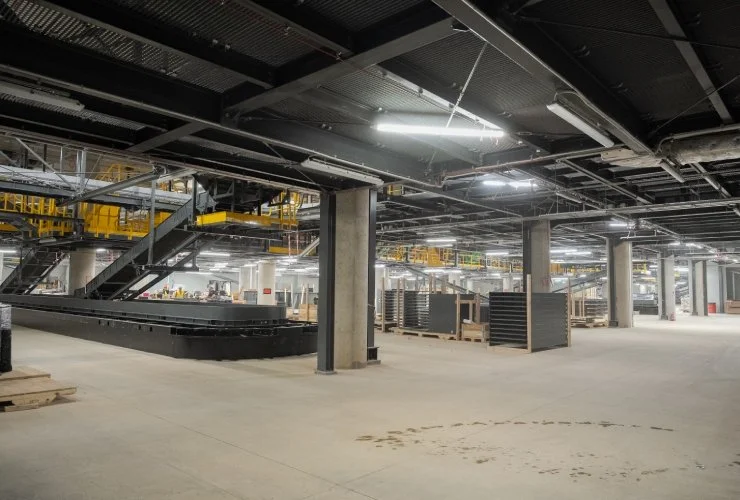
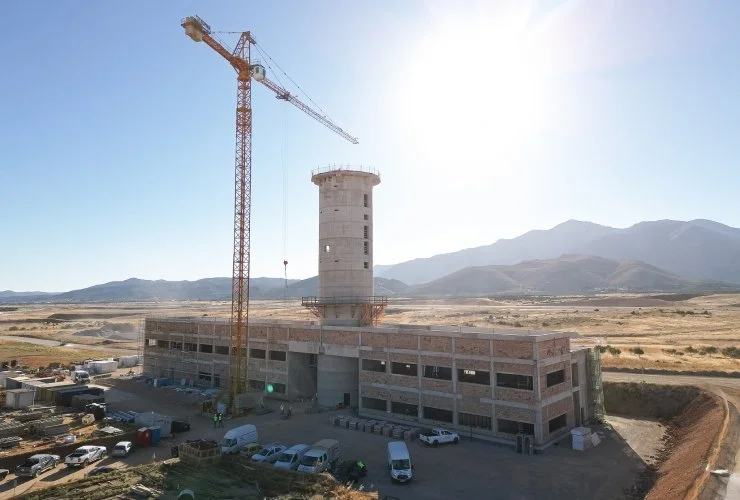
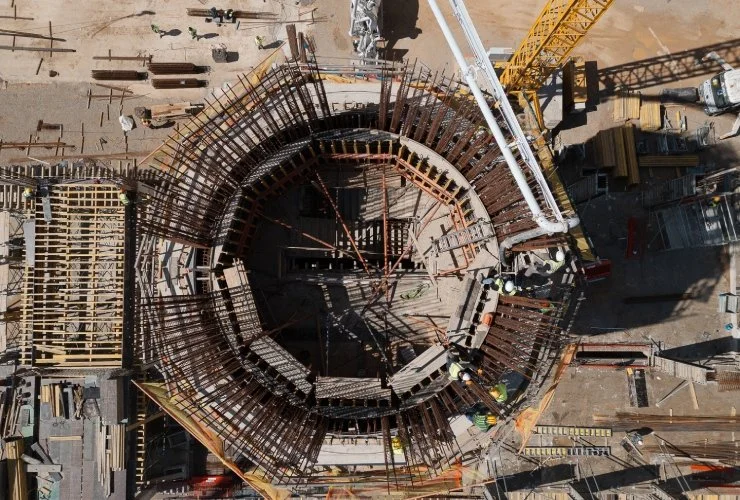
The upcoming Kastelli Airport near Heraklion, scheduled to open in 2027, represents Greece’s most significant aviation infrastructure investment in decades. Rather than replicating the tourism-terminal model, Kastelli offers the opportunity to develop genuine aerospace industry clustering. Crete’s size, educated workforce, and strategic Mediterranean location make it viable for the following:
Passenger-to-freighter conversion facilities (P2F): As European airlines retire older narrow-body aircraft, conversion demand will grow. Establishing a P2F modification centre at Kastelli would create high-skilled employment and position Greece more deeply within the European aerospace supply chain.
Maintenance, repair, and overhaul (MRO): International carriers require periodic heavy maintenance. Greece could diversify from Athens and compete with established MRO hubs in Malta, Cyprus, and Portugal by offering competitive labour costs, EU regulatory compliance, and Mediterranean climate advantages for outdoor storage and testing.
Technical education infrastructure: A dedicated aerospace technical school adjacent to Kastelli would supply skilled labour for MRO and conversion operations, whilst providing Greek students with pathways into aviation careers beyond cabin crew roles.
These initiatives require coordinated industrial policy and regulatory frameworks. The return would be substantial: a diversified island economy, year-round skilled employment, and reduced dependence on seasonal tourism, whilst leveraging existing airport infrastructure.
Beyond Passenger Flows
Greece has invested heavily in airport infrastructure, particularly across its islands. What remains unresolved is how that infrastructure is used. At present, much of this capacity is oriented towards seasonal passenger flows, leaving island economies highly sensitive to external disruption and limiting the broader economic return on long-term public investment. Airports function efficiently as gateways of tourism, but far less effectively as instruments of year-round economic integration.
The same runways that process seasonal visitors could support freight integration, industrial activity, and skilled employment across the islands. This could anchor diversified island economies and sustain dispersion over time. Greece has already absorbed the fixed costs of building and operating this network. The remaining question is whether it continues to serve a single economic function, or is leveraged as a platform for long-term development.
Photos of Kastelli Airport: International Airport Heraklion Crete SA