
Strategic Depth: The Greek Case
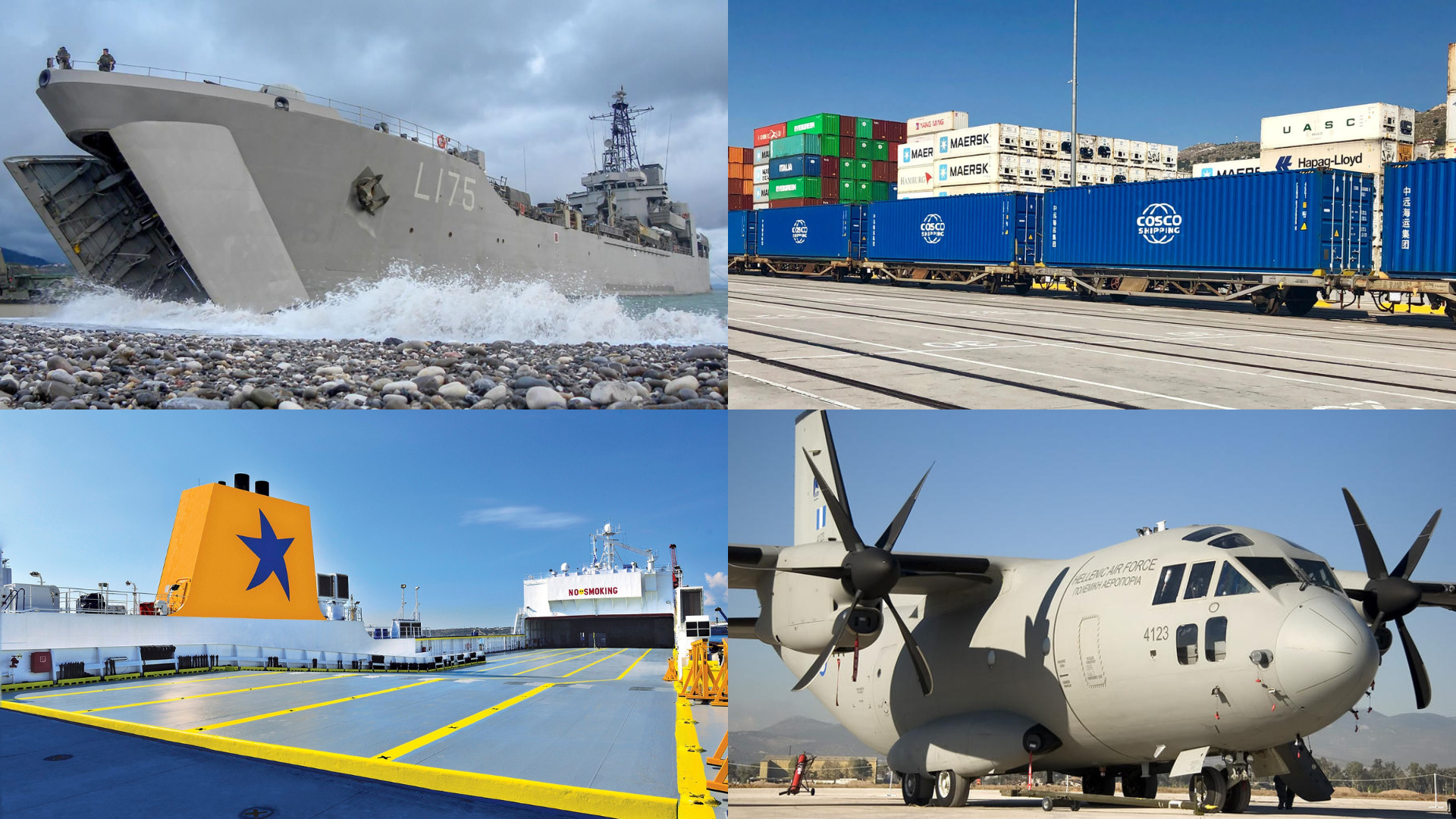
Strategic depth is often discussed as a policy choice, force structure, or investment. In practice, it is fundamentally a product of geography. Depth describes the degree to which a state possesses space, time, and redundancy sufficient to absorb pressure and disruption without suffering immediate strategic consequences. Some states inherit depth; others inherit constraint.
Greece belongs to the latter category. Its geography offers limited territorial buffers and short distances between critical infrastructure. Greece also suffers from minimal separation between population and economic centres. These characteristics are not the result of recent policy decisions. They are enduring conditions that shape strategic behaviour regardless of government, alliance, or doctrine.
This analysis treats strategic depth as a structural condition that constrains behaviour. The focus is therefore not on preferences or prescriptions, but rather on how a depth-limited maritime state compensates for geographic compression. Our attention is directed toward logistical mechanisms rather than political choices.
By examining the regional maritime domain and logistical continuity as substitutes for territorial depth, the aim is to isolate the operational functions that keep Greek strategic depth functioning.
What Strategic Depth Actually Provides
Strategic depth is often treated as a synonym for strength, scale, or ambition. Analytically, however, it confers a narrower and more concrete set of advantages. At its core, depth moderates the relationship between pressure and consequence. It does not remove risk, but it reduces the likelihood of irreversible outcomes. Three advantages arise from this, each with its own benefits and complications.
The first of these advantages is time. Distance and separation delay the effects of disruption, whether military, infrastructural, or economic. Time allows for observation and correction. It enables errors to be absorbed before they become decisive and provides room for escalation management.
The second is space, which enables concentration or dispersion. Infrastructure, personnel, and populations can be distributed in ways that reduce vulnerability, which Greece struggles with. Dispersion complicates targeting and allows systems to adapt as conditions change, but it does complicate supply chains.
Redundancy is the third advantage. Depth permits losses to be absorbed and activity to be rerouted. Alternative options such as supply routes and logistic nodes limit the strategic consequences of disruption. Redundancy does not prevent damage, but it prevents damage from becoming decisive.
Maritime Domain as Elastic Depth
Where territorial depth is limited, the maritime domain can perform its core functions. The sea does not replace land-based depth, but it does extend strategic space and introduce flexibility. For maritime states, like Greece, this elasticity is central to how depth is generated in practice.
Unlike land, maritime space is not fixed. It allows for movement and reconfiguration, where assets can be repositioned and routes adjusted. Civilian-wise, this mobility is seen clearly in Greece’s vast and dynamic domestic ferry network. Greece’s navy is also extremely well equipped for the crucial role of amphibious operations, something most global militaries have long surrendered. In effect, the sea stretches the strategic environment outward, increasing separation between points of friction and critical systems.
One of the trickiest tasks for Greece regarding the maritime domain is actively maintaining it through presence, surveillance, and constant access. Thankfully, Greece has been wise in acquiring and developing new equipment to meet the needs of the nation. Controversial at times, but necessary given the realities Greece holds claims to.
Islands, Basing, and Dispersion
Island geography alters how depth is managed, but does not remove the underlying constraints faced by a maritime state. Dispersing forces and infrastructure across multiple locations can reduce vulnerability to concentrated pressure, yet it also generates new dependencies. Dispersion complicates supply lines, protection, and surveillance.
In the Greek case, islands extend strategic space well beyond the mainland. Dispersion reduces dependence on a small number of critical sites, yet it increases exposure to disruption in transport and supply. This is why maintaining naval superiority is crucial for Greece. As previously mentioned, the Hellenic Armed Forces already operate a vast network of amphibious ships; however, many are ageing and should ideally be replaced.
Strategically speaking, Greece’s islands are used as watchtowers over the Aegean. The Bosphorus is critical, but all vessels must pass through the Aegean. While this improves awareness and response time, it depends heavily on reliable airlift, maintenance capacity, and personnel rotation. Maritime connections and regional air transport are not secondary enablers; they are structural requirements. Declining population, constraints in inter-island air freight, and limited sea-lift flexibility directly shape how long dispersion can be sustained under pressure.
From the perspective of depth, islands reduce the option of retreat and replace it with dependence on continuity. Strategic resilience rests less on protected space than on the ability to keep dispersed locations functioning day after day. When movement or supply falters, dispersion rapidly shifts from asset to liability. Islands can support depth, but only if the logistical demands they impose are consistently met.
Logistics as a Substitute for Depth
In territorially limited states, logistics performs functions that geography cannot. Where space offers little insulation, continuity of movement and supply becomes the primary means of absorbing pressure. Logistics does not create safety, but it slows failure. It buys time, preserves options, and prevents local disruption from cascading into collapse.
For Greece, this role is pronounced. Maritime trade, energy supply, food imports, and island connectivity all depend on uninterrupted movement across sea and air. In a dispersed environment, depth is sustained through the maintenance of flow between nodes. When these flows remain intact, pressure can be managed. When they falter, vulnerability accumulates quickly.
This places exceptional strain on systems often treated as routine. Inter-island shipping, regional air freight, port throughput, maintenance capabilities, and surge lift all shape how long dispersion remains viable. Greece lacks many of these. Inter-island shipping and port throughput are strengths; however, investments are desperately needed in maintenance, light-to-medium air-lifters, and rail infrastructure. Rail is one of Greece's weakest points, both historically and currently.
Implications
If strategic depth in the Greek case is generated through dispersion and continuity, then investment priorities must follow suit. Capabilities that sustain resilience under stress are not auxiliary to strategy; they are integral to it.
This places renewed emphasis on amphibious and maritime lift capabilities. Greece already retains a comparatively robust amphibious inventory, one that many advanced militaries have given up. Much of this fleet is ageing, and its replacement or modernisation should be understood not as renewal, but as depth maintenance. Amphibious platforms provide flexible basing and redundancy across islands. They allow forces, equipment, and supplies to be repositioned without reliance on fixed infrastructure. Greece also benefits from a civilian reserve, in the form of domestic ferry lines that could—and have—supported military needs in the past.
The same can be applied to airlift, which should be treated as a strategic enabler rather than a supporting asset. Greece’s existing airlift capabilities provide a foundation, but their scale leaves little margin for a potential sustained surge. Even modest expansion—on the order of a small number of tactical and medium transport, such as a mix of the Italian C-27J-class aircraft for the islands, and American C-130J-class aircraft—would meaningfully improve resilience. Both types are already operated, and the Ministry of Defence could also expand to include the newer Brazilian C-390. Airlift does not replace sea-lift, but it buys time when maritime movement is constrained and supports rapid personnel rotation. Expanded airlift capacity would also allow Greece to become even more useful for NATO and other allied nations.
The islands themselves hold inseparable economic and demographic significance. The majority are hollowed out, economically and demographically, thus requiring higher logistical burdens. Creating and supporting island industries, maintaining viable populations, and ensuring access to services are critical to Greek strategic depth. A populated and economically active island is easier to sustain, easier to defend, and less of a burden than one dependent on occasional support from the mainland.
Perhaps the most controversial topic discussed in this analysis is that of the domestic rail network. Rail is essential to sustaining depth. Ports, airbases, and logistics hubs depend on reliable inland movement to function. Greece’s rail network has historically been one of the country’s most critical weak points. Due to corruption, limited rolling stock, and underinvestment, accelerated rail modernisation and expansion carry potentially the highest near-term urgency. These investments would help reduce stress along routes from the interior to ports and lessen dependence on road transport.
There is no clean solution. Geographic constraints are immutable and margins for error remain narrow, but there are pathways for managing risk. When those pathways deteriorate in moments of crisis, resilience depends on continuity and on systems that preserve functionality. Denying these constraints, or assuming they can be overcome through posture alone, is more dangerous than confronting them directly.
Photos: U.S. Naval Institute, Blue and White Wings, Blue Star Ferries, Pearl Rail